Safe Water Access
Sources, treatment, distribution, quality, service levels and operations.

Configurable program architecture
Five solution pillars and nine flagship programs provide a practical starting point. Final scope, technology, cost and indicators follow assessment and joint approval.
Five solution pillars
Sources, treatment, distribution, quality, service levels and operations.
Safe sanitation, domestic wastewater, hygiene and behaviour change.
Schools, health facilities, places of worship, markets and public spaces.
Springs, watersheds, recharge, drought, floods and nature-based solutions.
Water audits, efficiency, reuse, risk, governance, monitoring and reporting.

Nine flagship programs
Communities need a reliable service, not only a new asset.
Source assessment, treatment, distribution, service connections, water safety and local management.
Assessment, design, implemented system, operator SOP, O&M plan and evidence pack.
Service functionality, quality tests, continuity, user access and operator readiness.
Students need inclusive facilities and routines that remain usable.
Water, toilets, handwashing, menstrual hygiene, accessibility, behaviour and school governance.
Facility plan, improvements, education materials, management SOP and handover.
Functional facilities, availability of water and soap, accessibility and management practice.
Safe care depends on reliable water, sanitation, hygiene and environmental cleaning.
Water service, sanitation, hand hygiene, cleaning, waste interfaces and service continuity.
Gap assessment, improvement plan, facilities, SOP, training and monitoring tools.
Service availability, functional hand-hygiene points, cleaning practice and readiness.
Sanitation infrastructure must be safe, inclusive and consistently used.
Household or communal sanitation, domestic wastewater, hygiene and behaviour change.
Assessment, technical design, implementation, community activation and management plan.
Use, functionality, safe containment, hygiene practice and management performance.
Water services rely on healthy sources, catchments and shared governance.
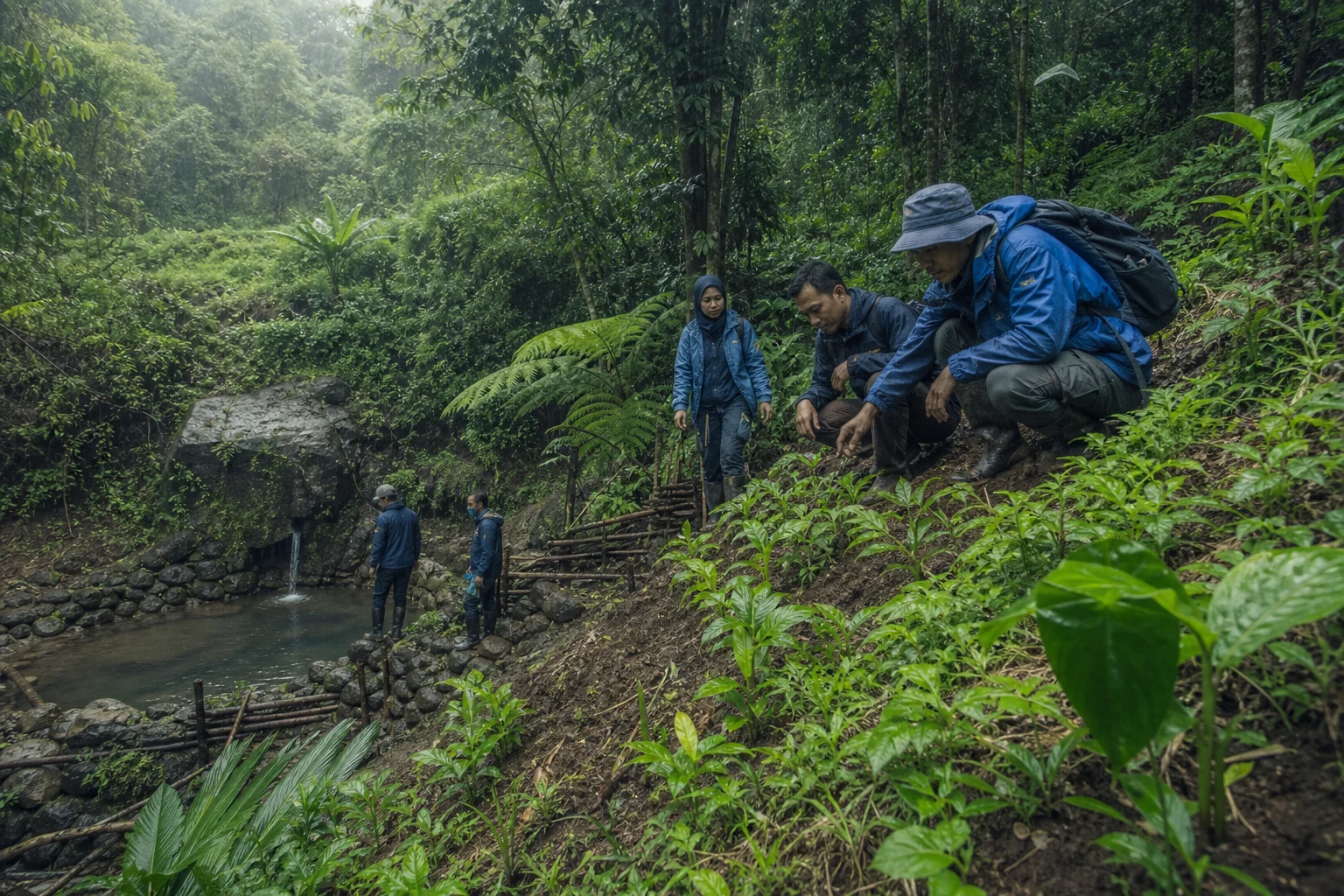
Spring protection, recharge, watershed restoration, river or wetland action and stewardship.
Risk map, intervention plan, field works, governance arrangements and monitoring framework.
Protection status, maintenance, agreed ecological proxies and stakeholder participation.
Drought, floods and climate variability threaten continuity and water quality.
Climate-risk assessment, source diversification, preparedness and resilient service planning.
Risk profile, adaptation plan, priority measures, operating triggers and response protocol.
Risk coverage, preparedness actions, redundancy and recovery readiness.
Organisations need to understand where water is used, lost and recoverable.
Water audit, balance, leak reduction, process optimisation, treatment and reuse feasibility.
Baseline, opportunity register, improvement roadmap, implementation support and verification plan.
Water intensity, losses reduced, reuse volume and verified operational savings.
Water decisions require traceable risk, performance and governance information.
Baseline, risk mapping, monitoring, evidence registers, collective action and reporting.
Data framework, tools, governance protocol, dashboard specification and reports.
Data completeness, issue closure, governance actions and reporting readiness.

Farmers, including those in remote or off-grid locations, need a reliable irrigation service that remains productive without unmanaged groundwater abstraction or dependence on unreliable grid power.
Hydrogeological assessment, permits, borehole construction, solar-powered or grid pumping (including standalone solar pump systems for off-grid and remote sites), storage, distribution, efficient irrigation and farmer water-user management.
Feasibility study, constructed and yield-tested borehole, solar or grid-powered pumping system, irrigation system, operator SOP, O&M plan and groundwater-monitoring plan.
Sustainable yield, service reliability, irrigated area, water-use efficiency, renewable energy share, groundwater trend and operator readiness.
Program names describe an offer architecture. Locations, technologies, capacities, budgets, targets and final claims are only established after assessment and approval.
This mapping is indicative. Final goals, targets and indicators follow the agreed program design, local context and available evidence. Impact claims are used only when the evaluation design supports them.

Water security & WASH implementation
Tell us the intended result, location, timeframe and evidence requirements. We will help map a practical starting point.
Start a project brief