Companies & SOEs
Contextual CSR/TJSL, water stewardship, ESG governance and reporting-ready evidence.
Indonesia-based implementation partner
rinwater connects infrastructure, behaviour, governance, data and maintenance so water and WASH services can work beyond project completion.
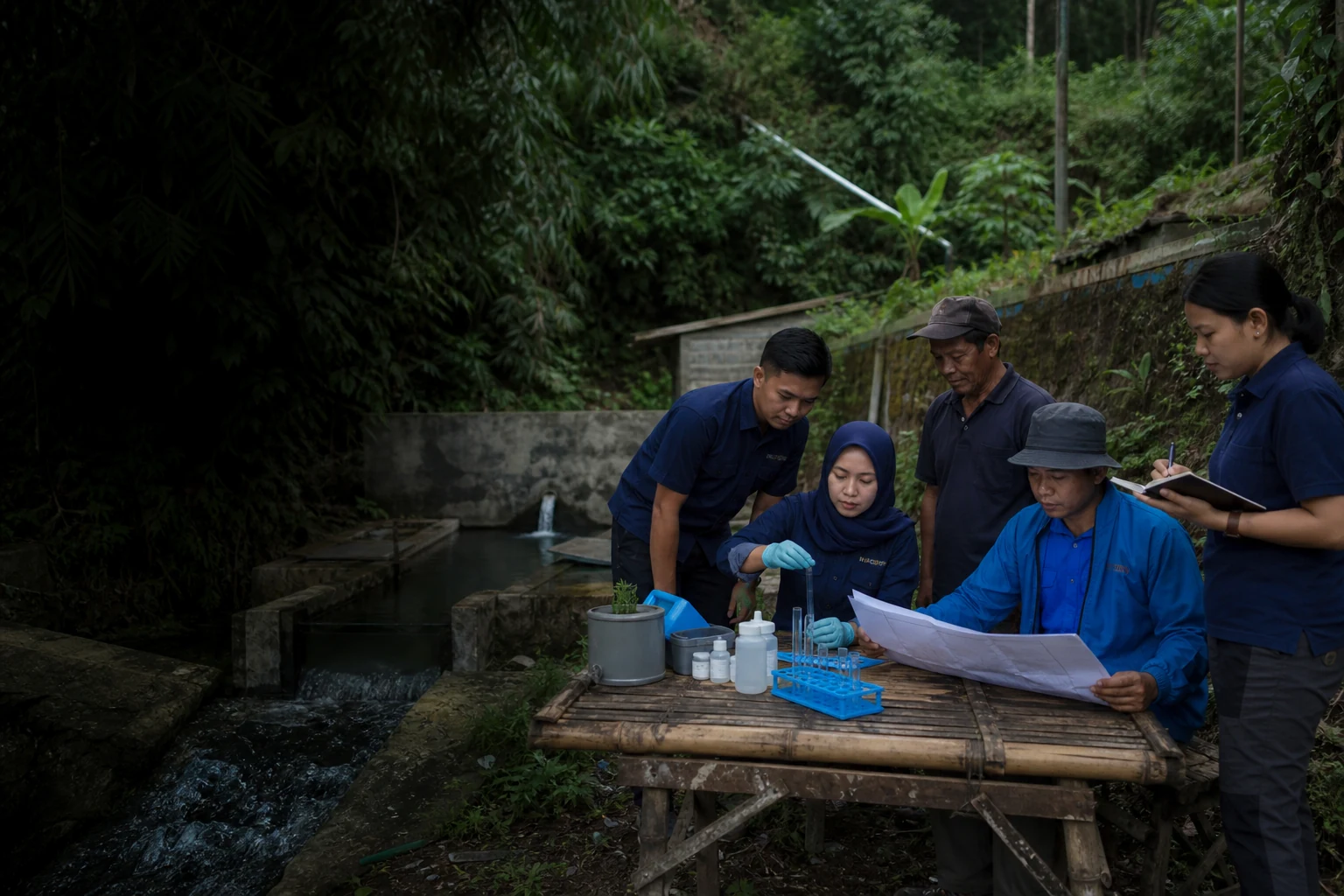
The systems challenge
A source can fail, a treatment unit can go unused and a facility can deteriorate when people, institutions, financing and evidence are treated as afterthoughts. We design them as one system from the start.
Partnership pathways
Contextual CSR/TJSL, water stewardship, ESG governance and reporting-ready evidence.
Responsible localisation, implementation readiness, learning and proportionate measurement.
Indonesia-based delivery with safeguards, milestones, coordination and reporting.
Defined local workstreams, technical integration, baseline, research and evaluation.

Connected capabilities
Each pillar can stand alone or connect with the others according to local needs and the commissioning organisation’s mandate.
Sources, treatment, distribution, quality, service levels and operations.
Safe sanitation, domestic wastewater, hygiene and behaviour change.
Schools, health facilities, places of worship, markets and public spaces.
Springs, watersheds, recharge, drought, floods and nature-based solutions.
Water audits, efficiency, reuse, risk, governance, monitoring and reporting.
SDGs alignment
SDG 6 is the primary goal across rinwater programs. Supporting goals reflect the health, education, gender, resource-efficiency, climate, ecosystem and partnership outcomes that a specific intervention may address.
Safe water, sanitation, hygiene, wastewater, efficiency, watershed protection and local management form the core of our work.
Solar-powered pumping brings reliable, low-carbon energy to irrigation and water systems in remote and off-grid locations.
Reliable and efficiently managed irrigation water can support resilient agricultural production and farmer livelihoods.
WASH services, hygiene and environmental cleaning support safer care and healthier communities.
Inclusive water, sanitation and hygiene facilities help create safer learning environments.
Menstrual hygiene, accessibility and equitable participation are integrated where relevant.
Water audits, loss reduction, efficiency and safe reuse support more responsible resource use.
Climate-risk assessment, preparedness and resilient water services strengthen adaptation.
Spring, catchment, river and wetland protection connects water services with healthy ecosystems.
Shared governance, local ownership, evidence and multi-stakeholder coordination support durable delivery.
This mapping is indicative. Final goals, targets and indicators follow the agreed program design, local context and available evidence. Impact claims are used only when the evaluation design supports them.
The content of this publication has not been approved by the United Nations and does not reflect the views of the United Nations or its officials or Member States. United Nations Sustainable Development Goals ↗
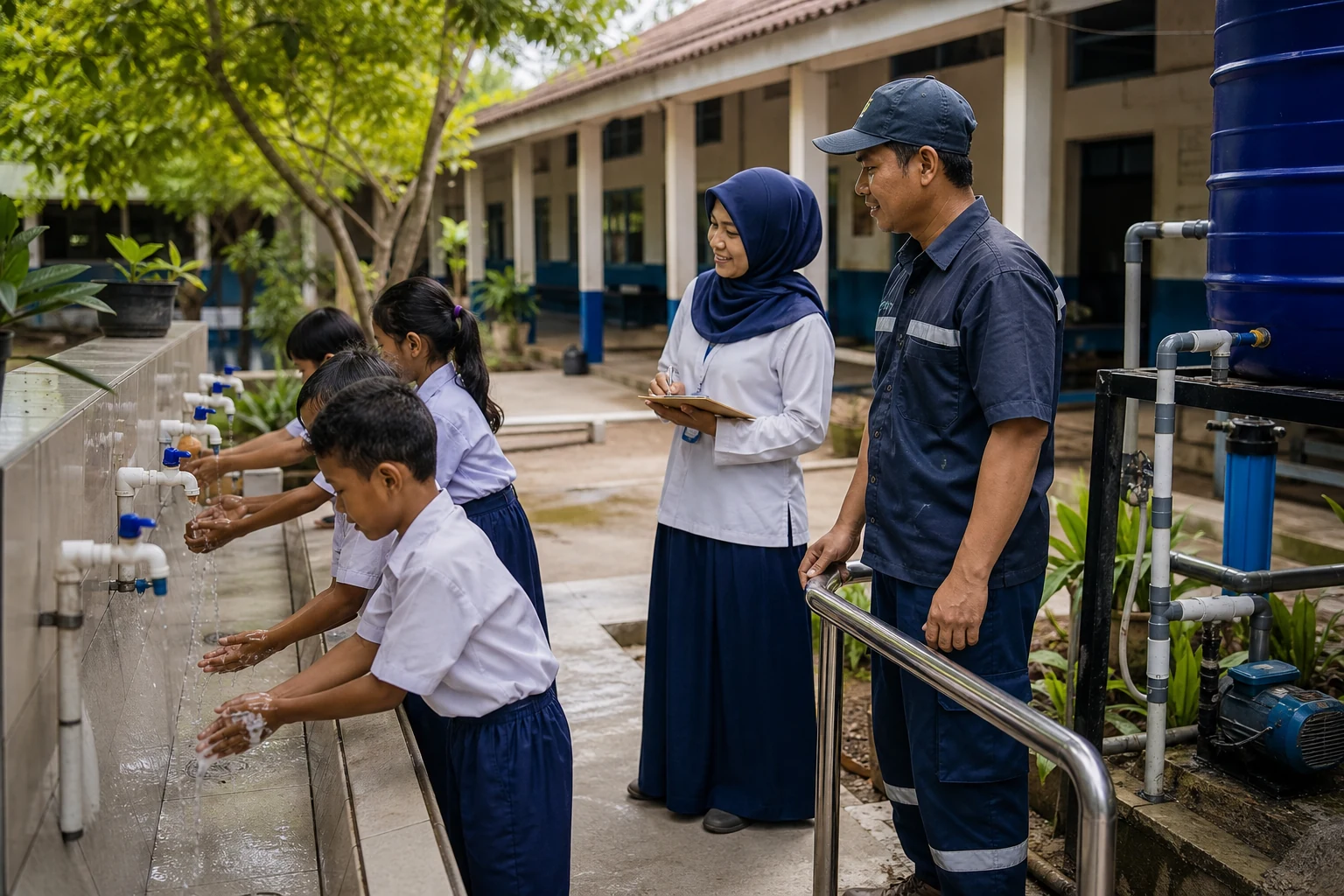 Representative illustration
Why rinwater
We do not force one technical answer across different sources, users and operating realities.
Assessment, design, mobilisation, delivery, monitoring and handover move through one accountable pathway.
Operators, costs, maintenance, complaints and decision rights are addressed before construction ends.
Activities, outputs, outcomes and impact are separated so reporting remains credible.
Delivery system
Mandate, location, users, risks, boundaries and evidence needs are made explicit.
Design, technology, permits, procurement, safeguards, teams and O&M are prepared together.
Field implementation runs with training, issue tracking, quality control and documentation.
Results are verified, operators strengthened and handover, financing and learning completed.

Evidence standard
Indicators, data sources, responsibilities and verification methods are agreed in proportion to the mandate. Safe-water and impact claims are only used when the underlying evidence supports them.
How we work →
Water security & WASH implementation
Tell us the intended result, location, timeframe and evidence requirements. We will help map a practical starting point.
Start a project brief